La Corallina was conceived as a project in which the creation of its decorative objects is also a cultural journey:...
Latest posts
-
 La Corallina’s Little LibraryRead more
 -
 THE CHARM OF CONTRASTRead more
Valentina Talks About the Mare Coralli Lampshade Among the pieces in the La Corallina collection, one lampshade...
-
 New collection AsinaraRead more
The new Asinara collection by La Corallina occupies a very distinctive aesthetic space: one in which Mediterranean...
-
 Okinawa: the Circle, the Sea, the GestureRead more
A conversation with Valentina about La Corallina’s Okinawa Collection There are objects created simply to be...
-
 Forms of Light: a conversation with Lorenzo about La Corallina’s lamp basesRead more
There are objects that do not merely support light, but prepare it, hold it, almost think it before it happens. The...
-
 Interview with Gioia, founder of La Corallina, on Ikat and its historyRead more
Ikat is an ancient technique, and this alone makes it fascinating. The term comes from the Malay mengikat, meaning...
-
 The shape of SpringRead more
That is exactly the case. Color is never neutral, but in spring this truth becomes evident. It is no longer contained...
-
 NEW COLLECTION ZODIACRead more
With this series of zodiac charger plates, we chose to move away from the most predictable idea of an astrological...
-
 Interview with Lorenzo Lambardi, Product and Store Manager at La CorallinaRead more
In less than a decade, with La Corallina we have managed to build a clear and recognizable identity, especially in...
-
 Interview with Valentina on the Concept Behind the Zanzibar CollectionRead more
In Zanzibar, color is not decoration but a true language. We wanted to avoid any form of neutrality: every shade is...
Blog categories
Search in blog

La Corallina’s Little Library
Certo, te lo lascio tutto senza grassetto.
La Corallina’s Little Library
La Corallina was conceived as a project in which the creation of its decorative objects is also a cultural journey: bibliophilia, a love of iconography and philosophy meet and intertwine, transforming each object into a small story made of images, ideas and forms.
From this comes the idea of La Corallina’s own little ideal library, which we will present in several instalments. Today, we begin with five very different books, united by a fascination with everything that escapes easy classification: fantastic animals, imaginary geographies, symbols, metamorphoses and forms that travel across the centuries.
The Physiologus — Anonymous
Adelphi, Piccola Biblioteca Adelphi, 1975
One of the foundational texts from which the medieval tradition of bestiaries would emerge. Real animals and fabulous creatures are described not so much for what they are as for what they signify: the lion, the phoenix and the unicorn become moral, religious and symbolic figures. A world in which nature and imagination have not yet become separate realms.
The Book of Imaginary Beings — Jorge Luis Borges and Margarita Guerrero
Adelphi, Biblioteca Adelphi, 2006
An encyclopaedia devoted to creatures that do not exist. Borges travels through mythologies, legends, sacred texts and the literature of every age, gathering dragons, sphinxes, basilisks and impossible animals. The result is a universal bestiary in which erudition becomes a form of the fantastic and the fantastic, almost imperceptibly, takes on the authority of truth.
The Goose of Hermogenes — Ithell Colquhoun
Edizioni di Atlantide
A novel, an initiatory journey, a Surrealist dream and an esoteric text: The Goose of Hermogenes deliberately escapes every definition. Colquhoun constructs a universe of metamorphoses, symbols, landscapes and apparitions in which things seem constantly on the verge of becoming something else. A strange book in the best sense of the word: rather than describing a world, it alters its coordinates.
The Dictionary of Imaginary Places — Alberto Manguel and Gianni Guadalupi
Archinto
An atlas of the nonexistent. Its territories are the cities, islands, kingdoms and continents invented by literature, described with the precision normally reserved for real geography. It is a book that turns reading into travel and suggests a fascinating idea: that cartography may serve not only to represent the world, but also all the worlds we have been able to imagine.
Le Moyen Âge fantastique: Antiquités et exotismes dans l’art gothique — Jurgis Baltrušaitis
Adelphi, gli Adelphi
Monsters, arabesques, hybrid creatures, distortions and images originating in distant worlds move through medieval European art. Baltrušaitis traces the migrations of forms, revealing a Middle Ages far less static than we tend to imagine: open to the East, to cultural cross-fertilisation and to the marvellous. A book about the ceaseless journey of images and their ability to transform as they pass from one culture to another.
Five books, then, but above all five ways of seeing: the bestiary, the encyclopaedia, the dream, the map and the image. La Corallina’s imagination also emerges from this uncertain territory, where reality and invention cease to be perfectly distinguishable.
A small bibliographical note: The Dictionary of Imaginary Places was originally published in 1980; the 2010 Archinto edition is the revised and expanded Italian edition. As for Le Moyen Âge fantastique, the original Adelphi edition appeared in 1973, while the edition in the gli Adelphi series referred to here dates from 1993.
Posted in:
Default category
Related posts
-
 Mise en place perfetta con i sottopiatti La Corallina!
I sottopiatti La Corallina sono accessori essenziali per la mise en place, in grado di dare un tocco di stile e...Read more
Mise en place perfetta con i sottopiatti La Corallina!
I sottopiatti La Corallina sono accessori essenziali per la mise en place, in grado di dare un tocco di stile e...Read more -
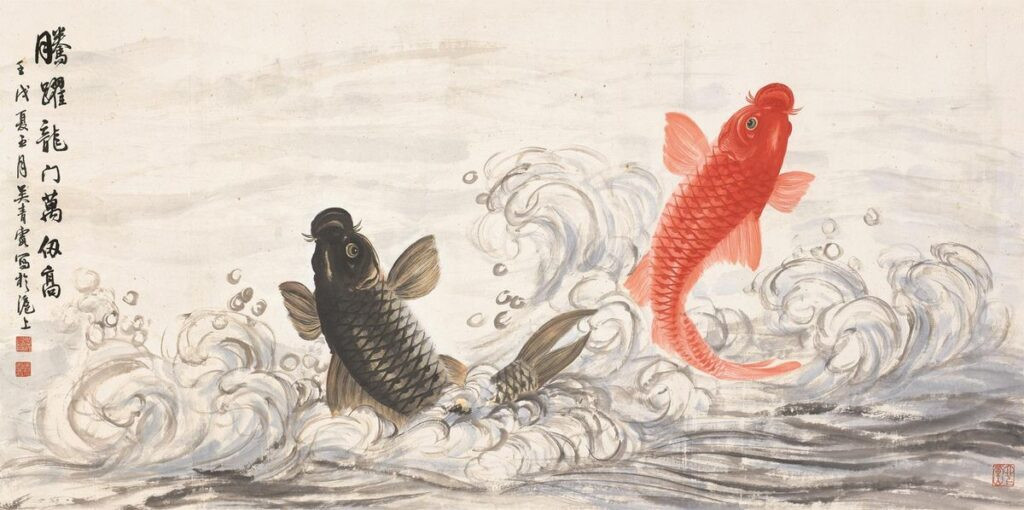 Carpa Koi: la simbologia della carpa nell'arte orientale.
Con il termine giapponese “KOI” si individua essenzialmente il pesce noto come carpa. In realtà il termine è generico...Read more
Carpa Koi: la simbologia della carpa nell'arte orientale.
Con il termine giapponese “KOI” si individua essenzialmente il pesce noto come carpa. In realtà il termine è generico...Read more -
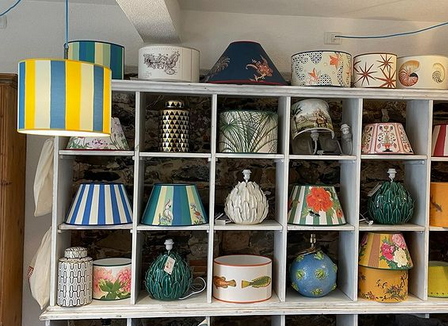 Estate, tempo di paralumi in riva al mare
As the beautiful season approaches, our seaside home also needs a makeover. We can start spending lovely days...Read more
Estate, tempo di paralumi in riva al mare
As the beautiful season approaches, our seaside home also needs a makeover. We can start spending lovely days...Read more -
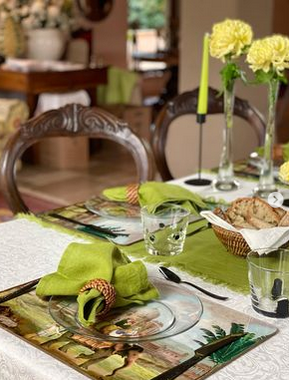 Colonial Style Furniture: History, Tips, and Curiosities.
Lo stile coloniale è un'interpretazione di arredamento che trae le sue origini proprio dal periodo coloniale. Nasce...Read more
Colonial Style Furniture: History, Tips, and Curiosities.
Lo stile coloniale è un'interpretazione di arredamento che trae le sue origini proprio dal periodo coloniale. Nasce...Read more -
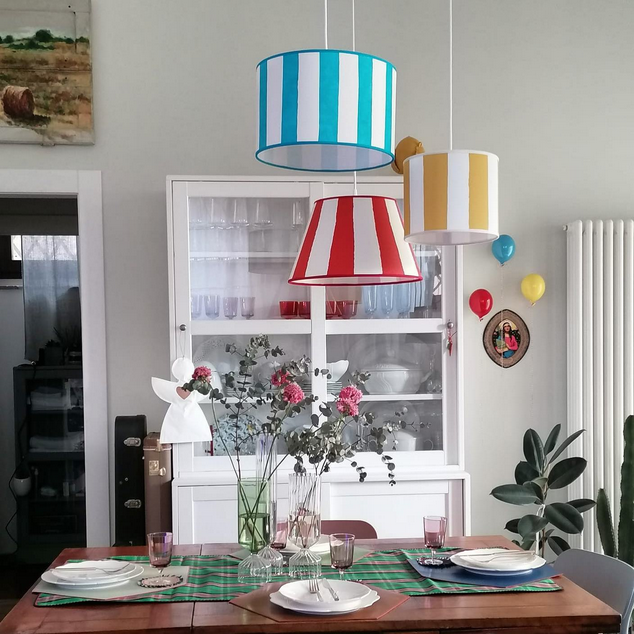 Come scegliere il giusto Paralume.
Come scegliere il giusto paralume? Regalare un paralume è senza ombra di dubbio un'idea originale e molto...Read more
Come scegliere il giusto Paralume.
Come scegliere il giusto paralume? Regalare un paralume è senza ombra di dubbio un'idea originale e molto...Read more
Leave a comment